Florida Biology 1 EOC Practice Test
5 free Biology 1 practice questions below, each with the correct answer and a worked explanation you can read straight away. Every question is written in-house to the standards the course is tested on — none is reproduced from any official Florida assessment.
Practice questions with answers
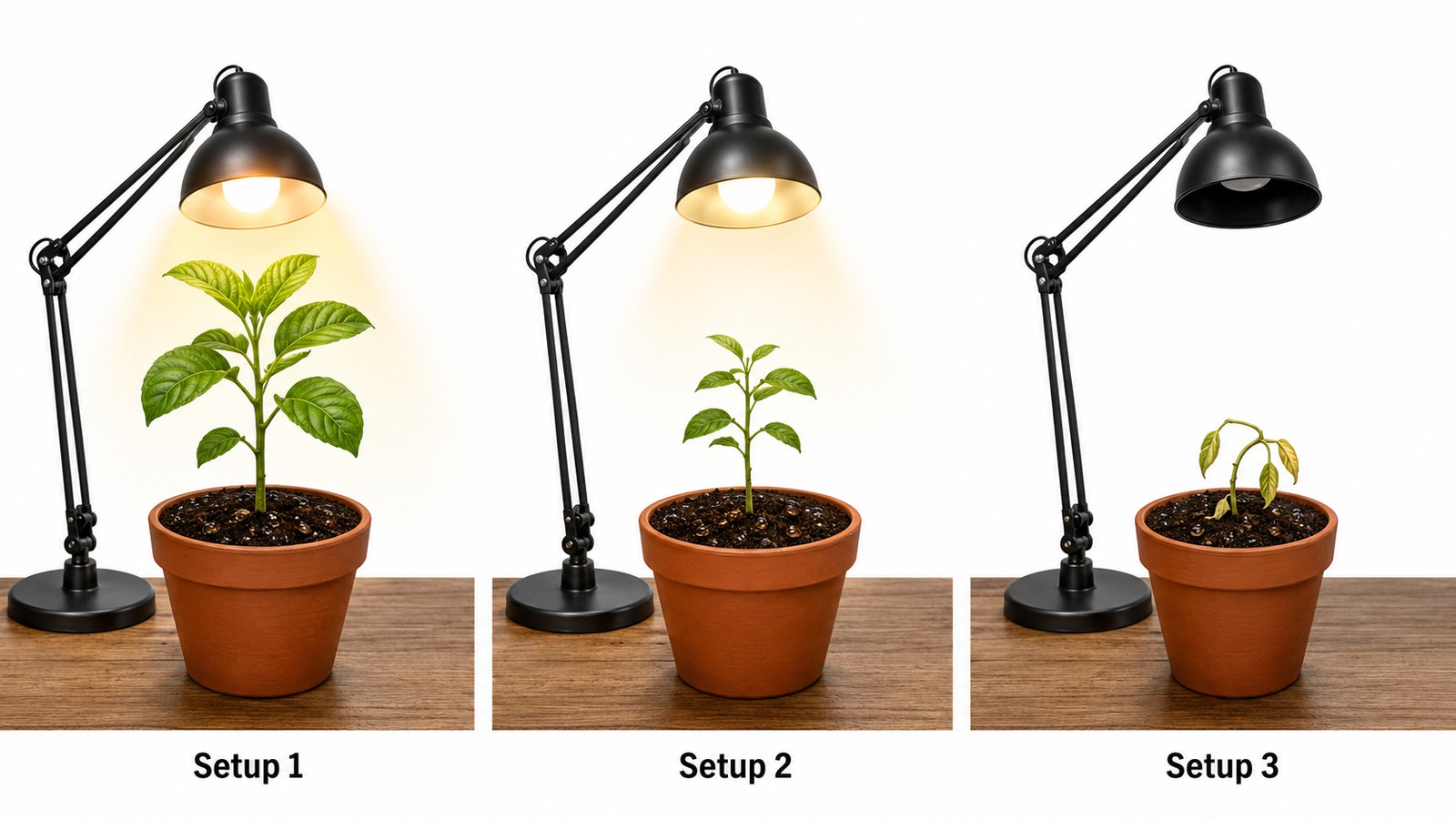
- A. Independent: plant height; Dependent: light
- B. Independent: light; Dependent: plant height
- C. Independent: water; Dependent: soil
- D. Independent: temperature; Dependent: light
Show the answer and explanation
Correct answer: B. Independent: light; Dependent: plant height
- A. Artificial selection
- B. Natural selection
- C. Genetic engineering
- D. Spontaneous generation
Show the answer and explanation
Correct answer: B. Natural selection
Which class of biomolecule is built from nucleotide monomers?
- A. Nucleic acids (DNA and RNA)
- B. Proteins
- C. Carbohydrates
- D. Lipids
Show the answer and explanation
Correct answer: A. Nucleic acids (DNA and RNA)
Lipids store roughly twice as much energy per gram as carbohydrates. Which property of lipid molecules best explains this?
- A. Long hydrocarbon chains contain many C–H bonds that can be oxidized to release energy
- B. They are insoluble in water, so they take up less space when stored
- C. They form longer polymer chains than carbohydrates
- D. They contain more nitrogen atoms than carbohydrates
Show the answer and explanation
Correct answer: A. Long hydrocarbon chains contain many C–H bonds that can be oxidized to release energy
Why does the left ventricle have a thicker muscular wall than the right ventricle?
- A. It must pump blood at higher pressure to reach the entire body
- B. It receives more deoxygenated blood from the body
- C. It contains valves that the right ventricle lacks
- D. It is in direct contact with the lungs
Show the answer and explanation
Correct answer: A. It must pump blood at higher pressure to reach the entire body
Want the full-length timed version?
A complete Biology 1 mock exam in EOC format, scored, with an explanation on every question.
See Biology 1 mock examsWhat the Biology 1 EOC covers
- 11A-12F — Ecology
- 1A-3F — Science Processes and Methods
- 4A-5D — Cells
- 6A-6H — DNA and the Genetic Code
- 7A-7F — Natural Selection
- 9A-9D — Biomolecules
- 10A-10C — Biological Systems
- 8A-8C — Taxonomy
Short lessons on the ideas these questions test
- Biology — Essential Concepts (Quick Reference)
- Cell Structure & Organelles: A Tour Inside the Cell
- Cell Membrane & Transport: How Things Get In and Out
- Cell Cycle & Mitosis: How One Cell Becomes Two
- Mitosis vs Meiosis: Two Divisions, Two Outcomes
- DNA Structure & Replication: The Code of Life and How It Copies Itself
What this cannot rehearse: Florida delivers some items in formats beyond multiple choice — drag-and-drop, equation editor, multi-select. Practice here is multiple choice, so pair it with the Department of Education's own sample items for format familiarity. Florida CAP Prep™ is not affiliated with, endorsed by or sponsored by the Florida Department of Education. The percentages on this page are our own practice thresholds, not Florida achievement levels.
More: all EOC practice tests · EOC guides · Biology 1 lessons