Question 1 of 21
The Industrial Revolution in America led to:
Adecreased immigration
Breturn to farming
Csmaller cities
Durbanization and factory growth
Explanation
📌 Shift from agriculture → manufacturing. Urbanization, factory system, new inventions, labor unions.
Question 2 of 21
Abraham Lincoln issued the Emancipation Proclamation in: 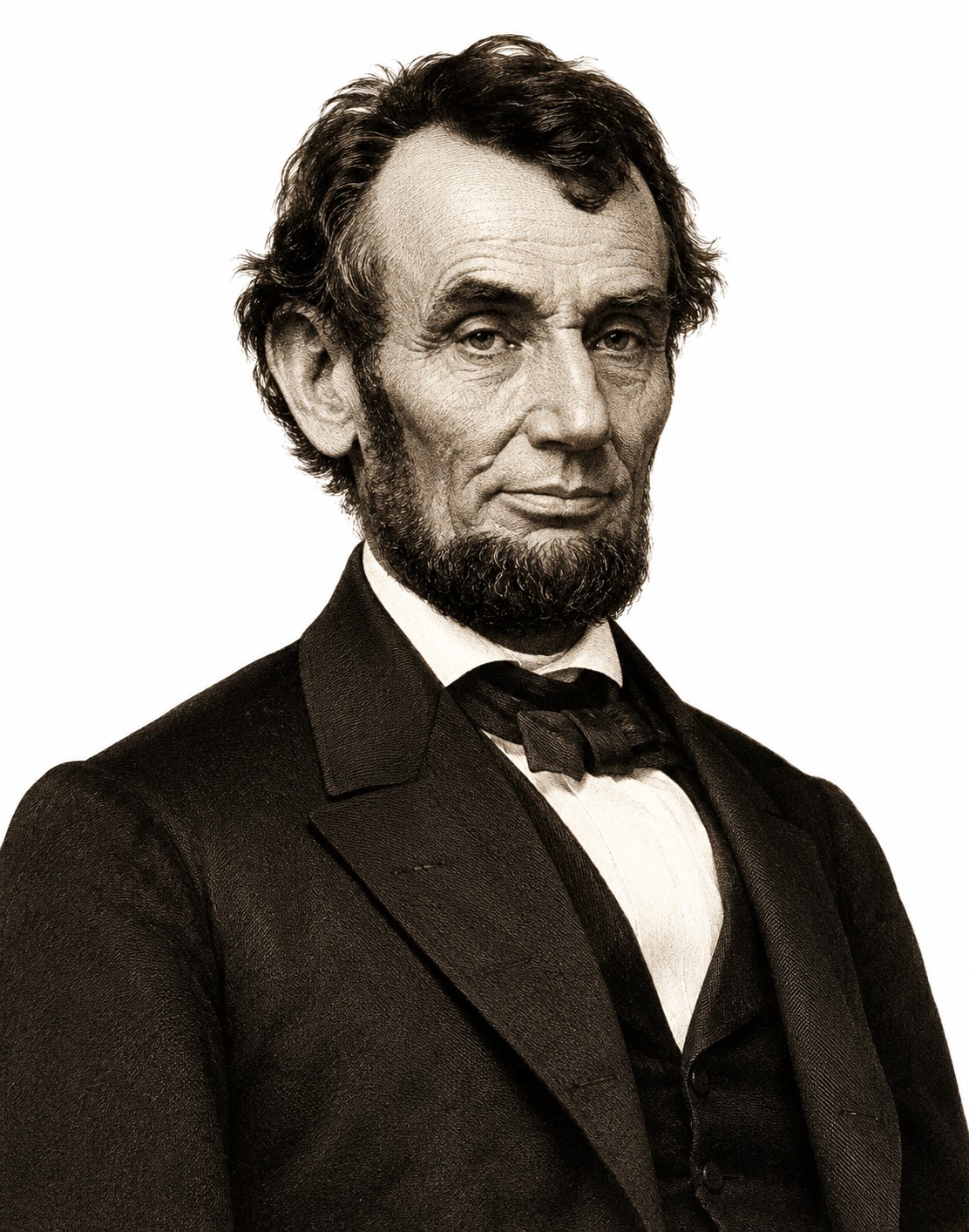
A1865
B1863
C1870
D1860
Explanation
📌 1863. Freed enslaved people in Confederate states. Did NOT free slaves in border states.
Question 3 of 21
D-Day (June 6, 1944) was:
Athe bombing of Pearl Harbor
Bthe end of WWI
Cthe Allied invasion of Normandy
Dthe dropping of the atomic bomb
Explanation
📌 Allied invasion of Normandy, France. Largest amphibious invasion in history. Turning point of WWII in Europe.
Question 4 of 21
The Civil War was fought primarily over:
AReligious differences
BSlavery and states' rights
CForeign invasion
DTrade disputes
Explanation
📌 Slavery and states' rights. Southern states seceded to preserve slavery. 1861-1865.
Question 5 of 21
The 13th Amendment:
Acreated the income tax
Bestablished Prohibition
Cabolished slavery
Dgave women the right to vote
Explanation
📌 Abolished slavery (1865). 14th = citizenship/equal protection. 15th = voting rights regardless of race.
Question 6 of 21
The New Deal was:
Aa peace treaty after WWI
BLincoln's plan for Reconstruction
CFDR's programs to combat the Great Depression
Da trade agreement with Britain
Explanation
📌 FDR's programs (1933-1939) to combat the Great Depression. Created jobs, reformed banking, established Social Security.
Question 7 of 21
The Battle of Gettysburg (1863) was important because: 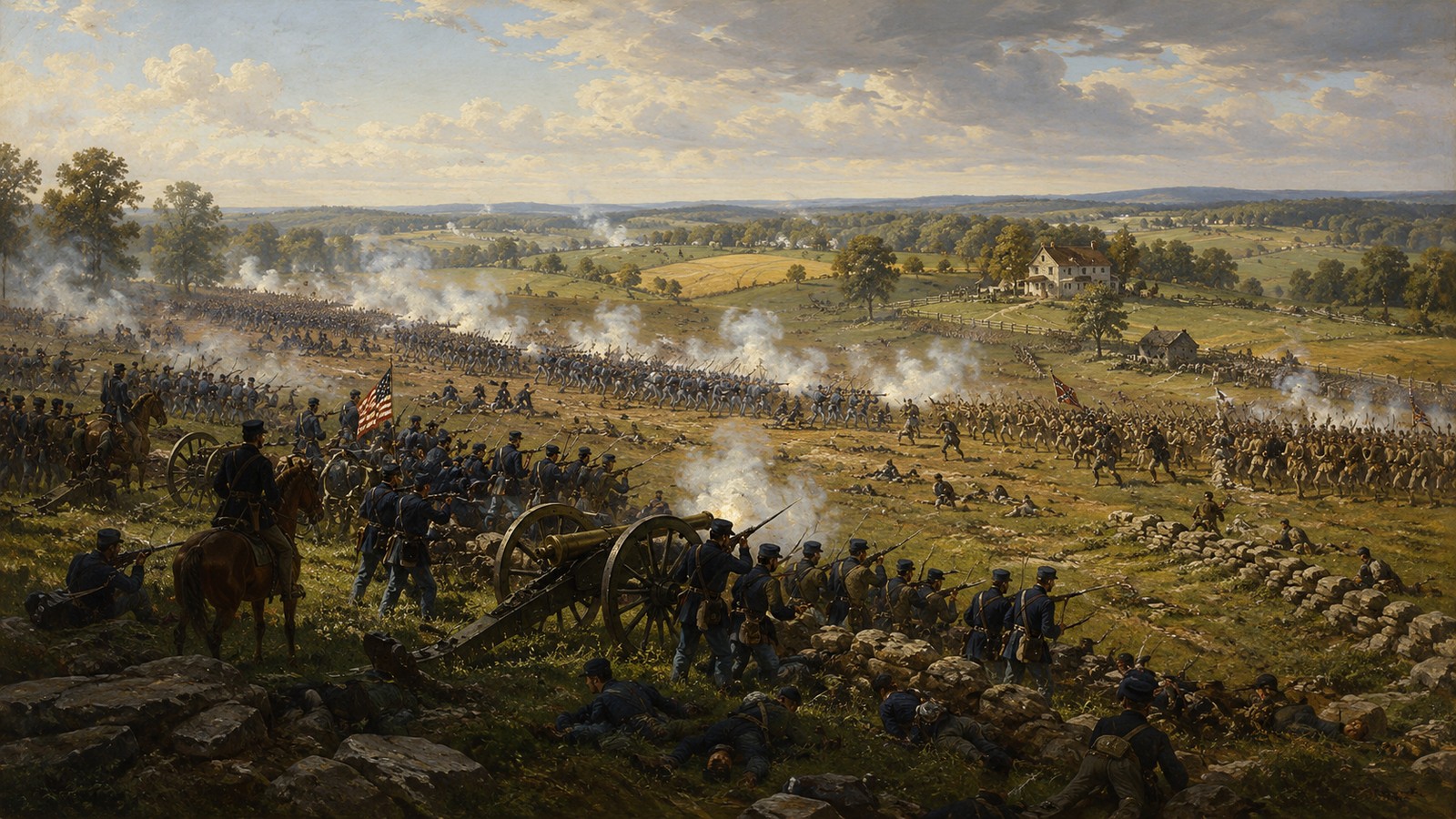
Ait ended slavery
Bit was the last battle
Cit was the turning point of the Civil War
Dit started the war
Explanation
📌 Turning point of the Civil War. Union victory. Ended Lee's invasion of the North. Bloodiest battle.
Question 8 of 21
The Dust Bowl occurred primarily in:
ANew England
Bthe Great Plains
Cthe Southeast
DCalifornia
Explanation
📌 Great Plains (Oklahoma, Kansas, Texas) in the 1930s. Drought + poor farming → massive dust storms → migration.
Question 9 of 21
Martin Luther King Jr. is best known for: 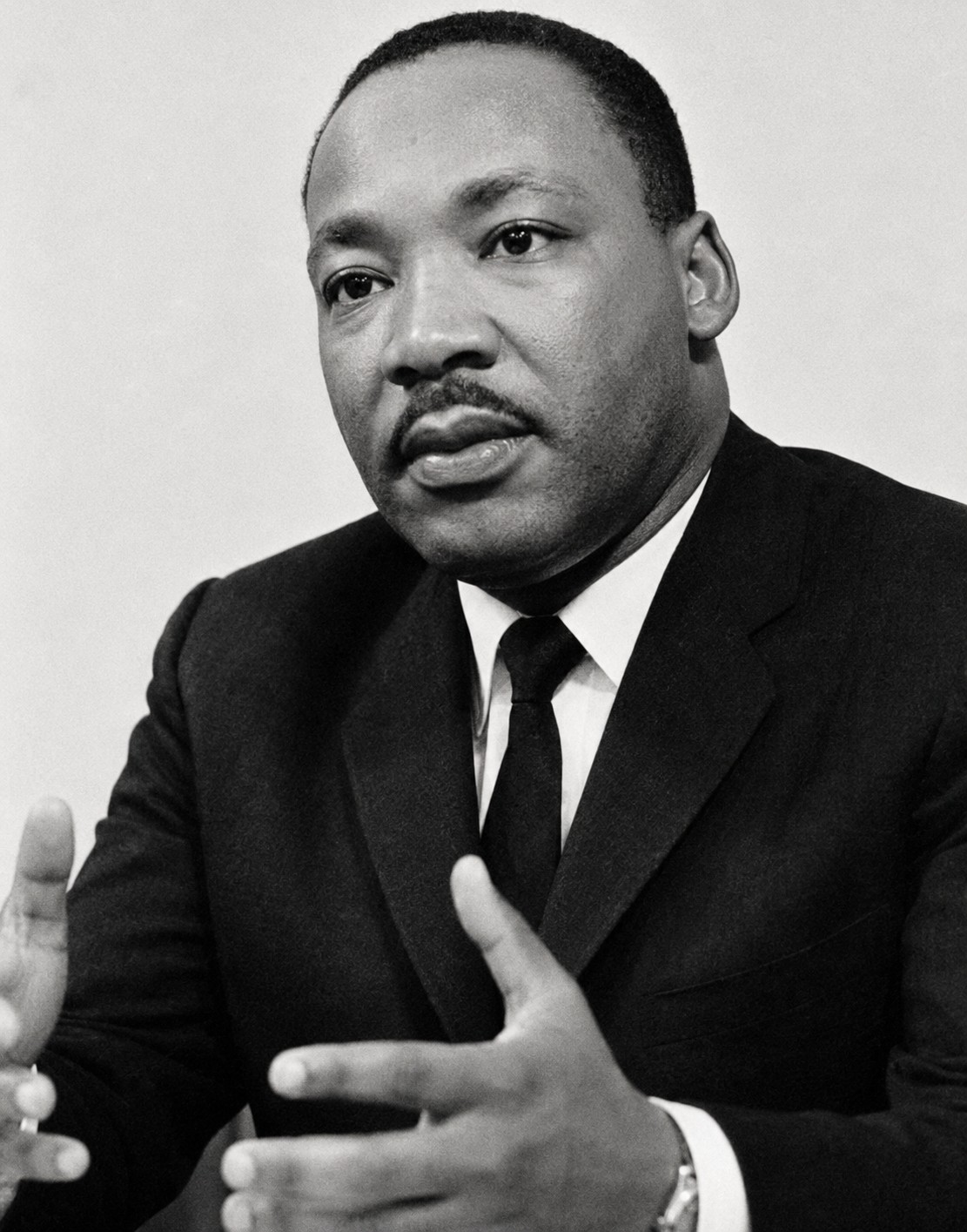
Awriting the Constitution
Bleading the American Revolution
Cinventing the telephone
Dleading the Civil Rights Movement
Explanation
📌 Leading the Civil Rights Movement through nonviolent protest. 'I Have a Dream' speech (1963). Assassinated 1968.
Question 10 of 21
The Berlin Wall fell in:
A1991
B2001
C1975
D1989
Explanation
📌 November 9, 1989. Symbolized the end of the Cold War. Germany reunified 1990.
Question 11 of 21
The Great Depression began with the stock market crash of:
A1939
B1919
C1929
D1941
Explanation
📌 October 29, 1929 ('Black Tuesday'). Lasted through the 1930s. FDR's New Deal attempted recovery.
Question 12 of 21
The Alien and Sedition Acts (1798) were controversial because:
Athey ended slavery
Bthey restricted free speech and targeted immigrants
Cthey expanded voting rights
Dthey declared war on France
Explanation
📌 Limited free speech and targeted immigrants. Seen as unconstitutional by Jefferson/Madison (Virginia and Kentucky Resolutions).
Question 13 of 21
The Civil Rights Act of 1964: 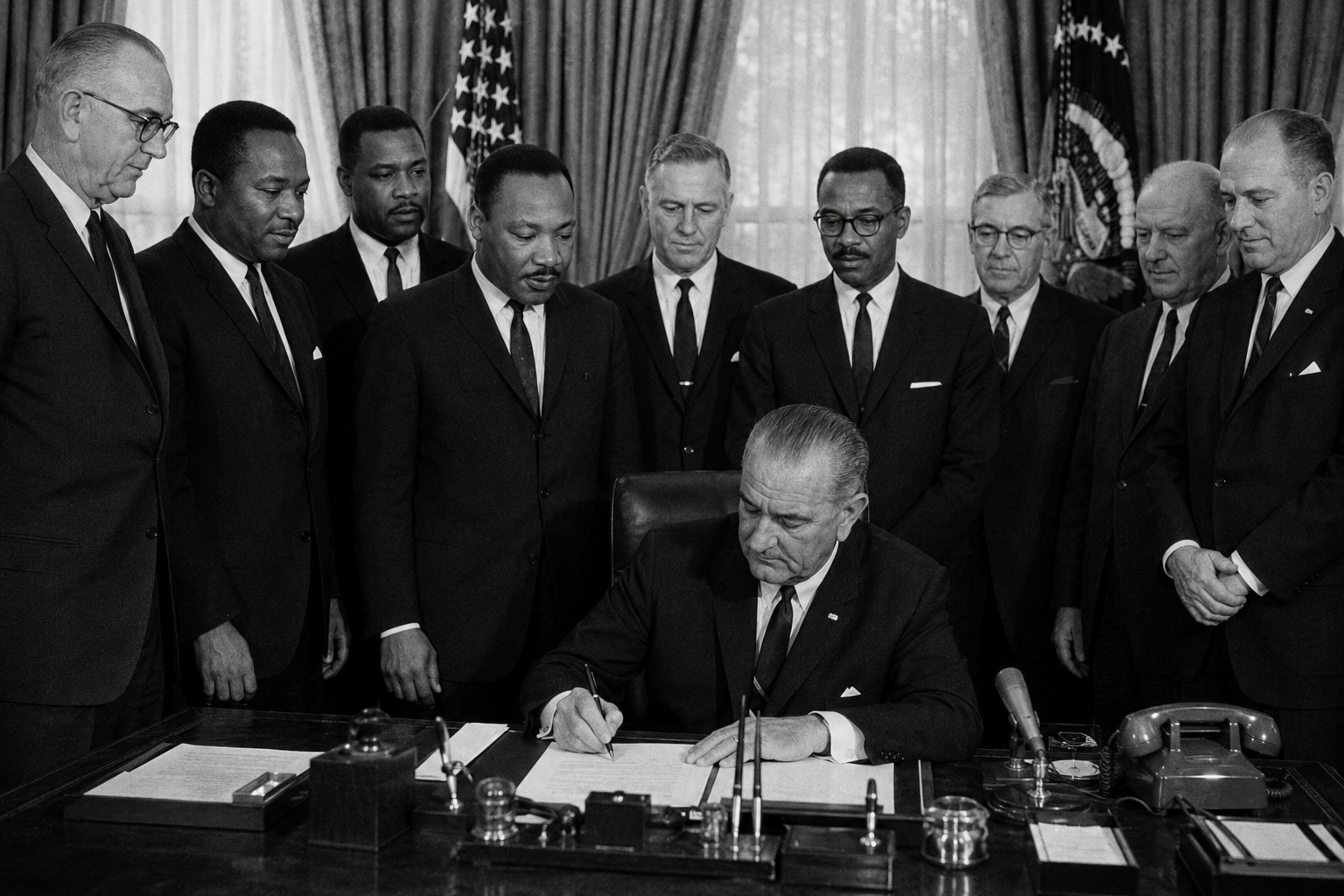
Agave women the right to vote
Babolished slavery
Cestablished Social Security
Doutlawed discrimination based on race, color, religion, sex
Explanation
📌 Outlawed discrimination based on race, color, religion, sex, or national origin. Ended Jim Crow laws.
Question 14 of 21
The Harlem Renaissance was:
Aa political movement
Ba religious revival
Ca military campaign
Dan African American cultural and artistic movement
Explanation
📌 1920s-1930s. African American cultural movement in Harlem, NYC. Literature, music (jazz), art. Langston Hughes, Duke Ellington.
Question 15 of 21
The US entered World War I in:
A1918
B1914
C1920
D1917
Explanation
📌 1917. Reasons: unrestricted submarine warfare, Zimmermann Telegram. Allies won 1918.
Question 16 of 21
Pearl Harbor was attacked on: 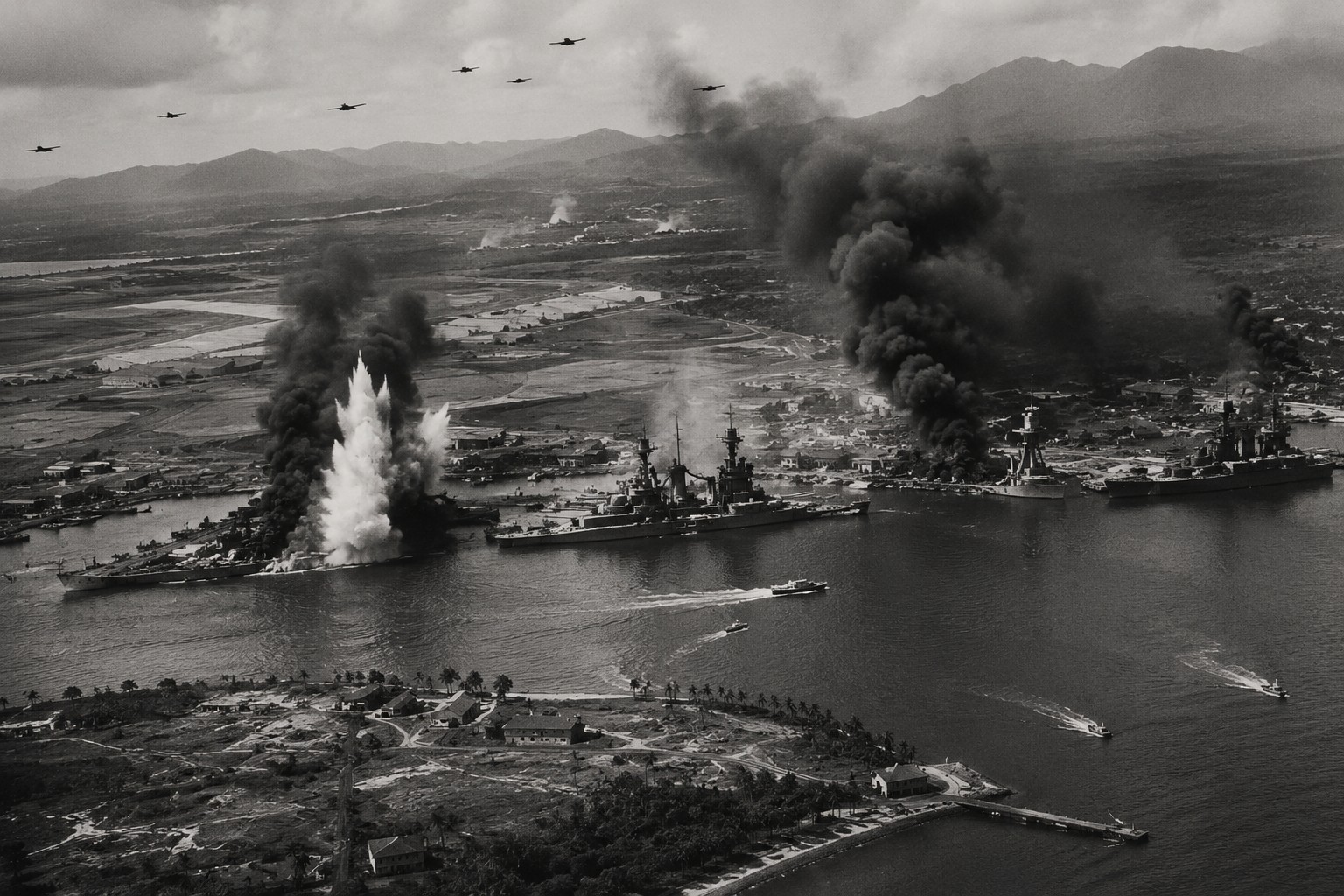
AJune 6, 1944
BAugust 6, 1945
CDecember 7, 1941
DNovember 11, 1918
Explanation
📌 December 7, 1941. Japan attacked the US naval base in Hawaii. US entered WWII the next day.
Question 17 of 21
The Reconstruction era occurred:
Abefore the Civil War
Bafter the Civil War (1865-1877)
Cduring the Revolutionary War
Din the 1920s
Explanation
📌 1865-1877. After Civil War. Rebuilding the South, integrating freed slaves. 13th-15th Amendments passed.
Question 18 of 21
The Cold War was between:
AUS and Japan
BUS and China
CUS and Germany
DUS and USSR
Explanation
📌 US (capitalism/democracy) vs USSR (communism). 1947-1991. Never direct military conflict → 'cold.'
Question 19 of 21
Brown v. Board of Education (1954) ruled that:
Athe draft is legal
Bprayer in school is required
Cschool segregation is unconstitutional
Dwomen can vote
Explanation
📌 'Separate but equal' is unconstitutional. School segregation violated the 14th Amendment. Overturned Plessy v. Ferguson.
Question 20 of 21
The transcontinental railroad was completed in: 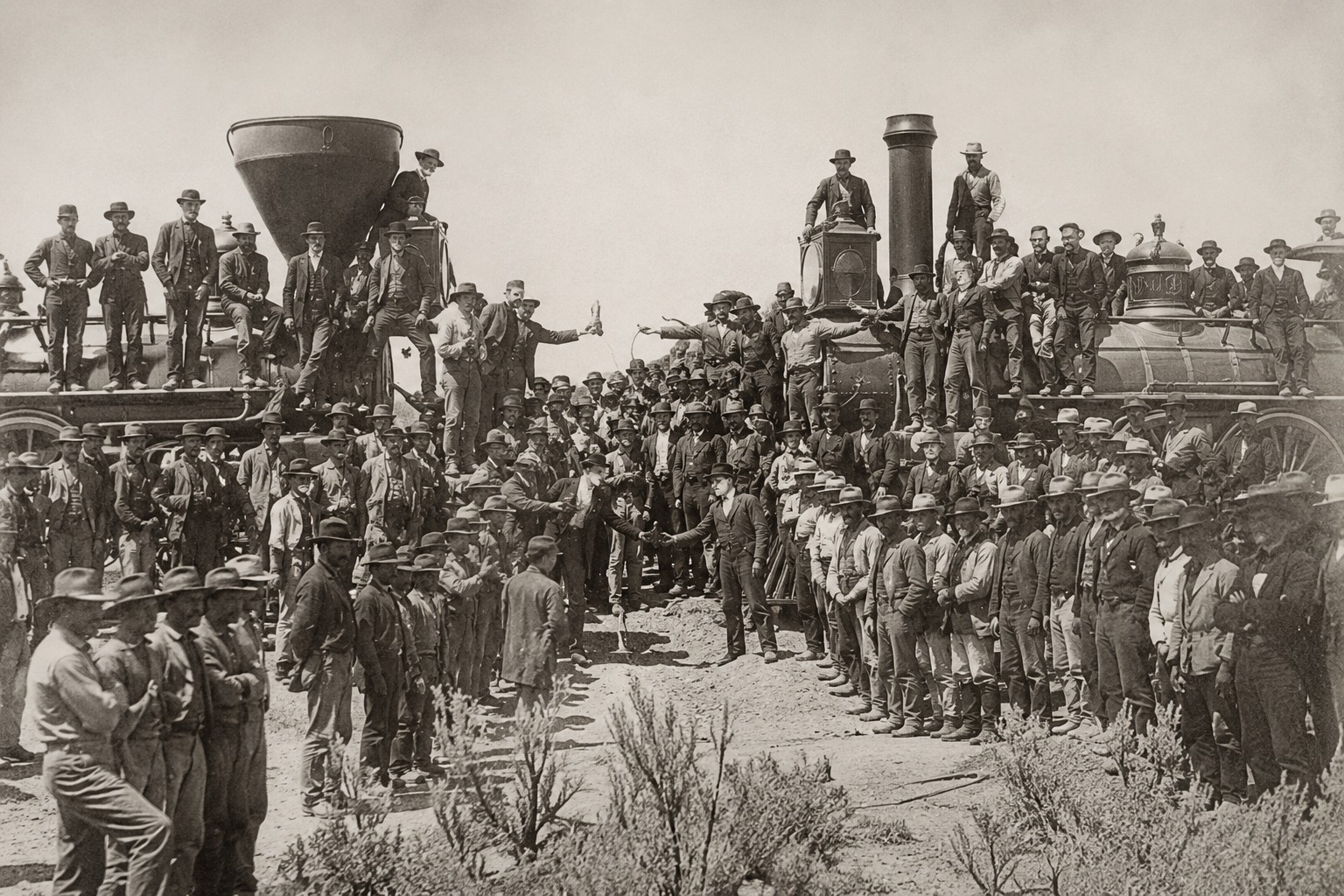
A1849
B1869
C1889
D1900
Explanation
📌 1869 at Promontory Summit, Utah. Connected East and West coasts. Central Pacific + Union Pacific railroads.
Question 21 of 21
The 19th Amendment (1920) gave:
A18-year-olds the right to vote
Bwomen the right to vote
Cimmigrants the right to vote
DAfrican Americans the right to vote
Explanation
📌 Women the right to vote. Result of the women's suffrage movement led by Susan B. Anthony, Elizabeth Cady Stanton.